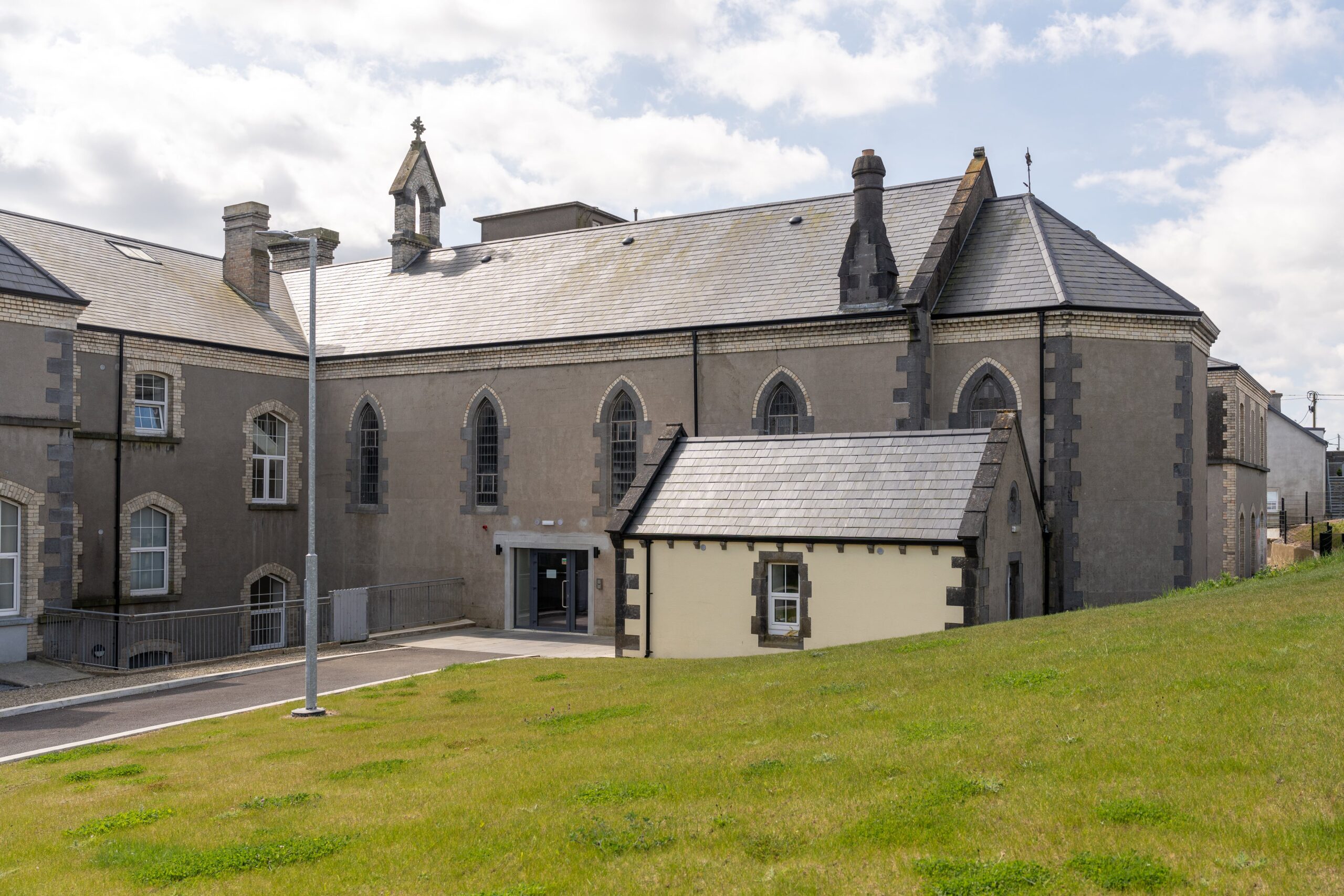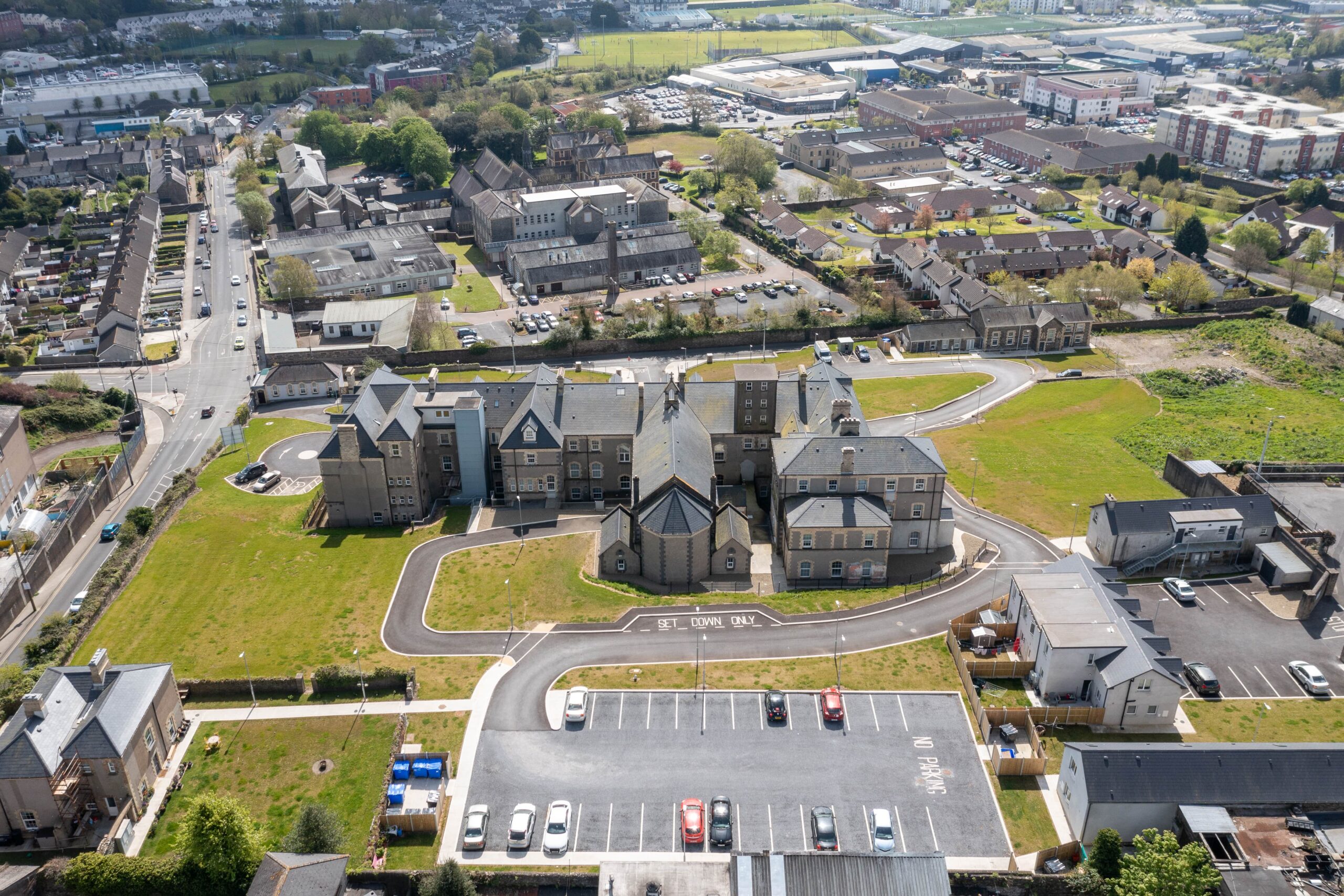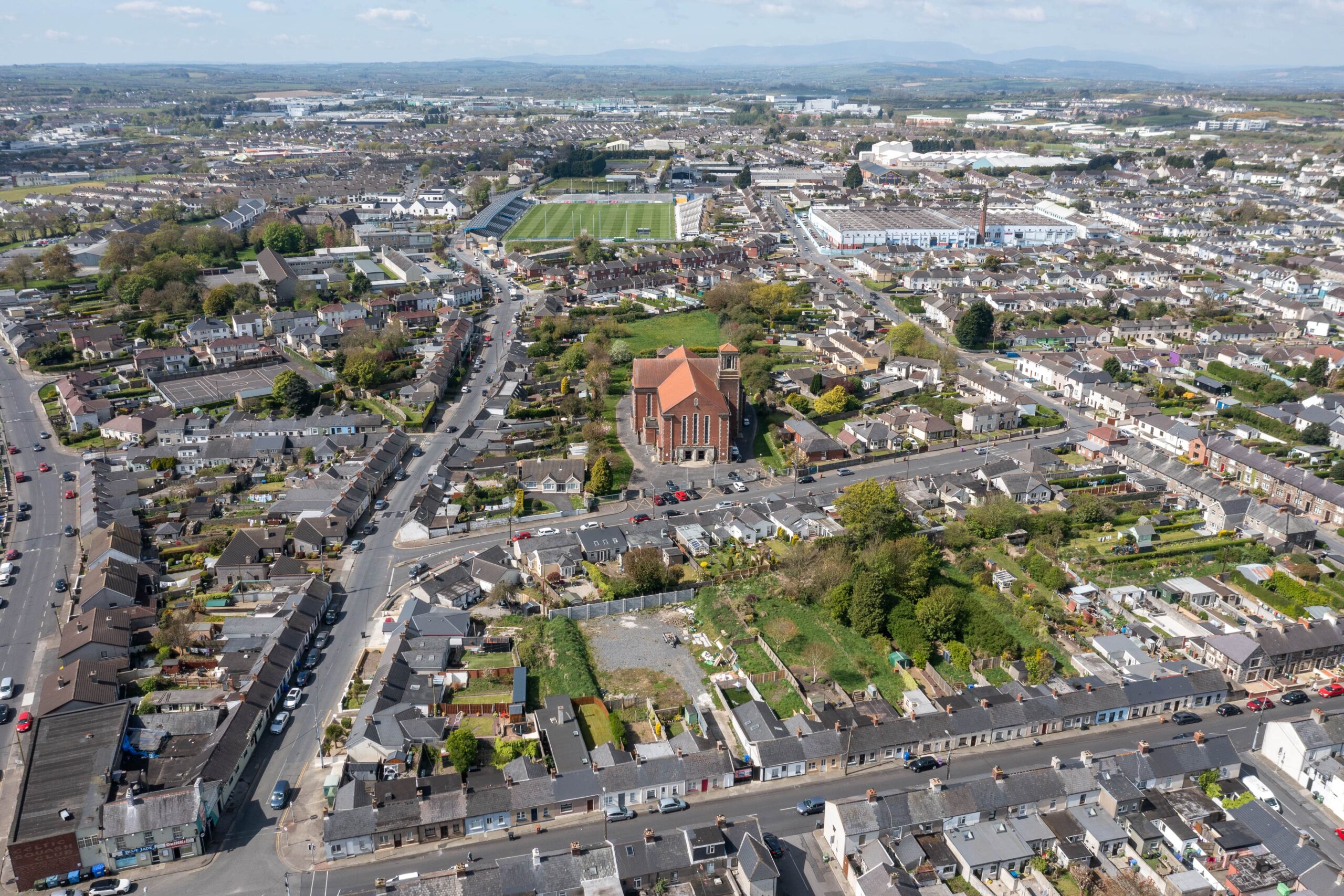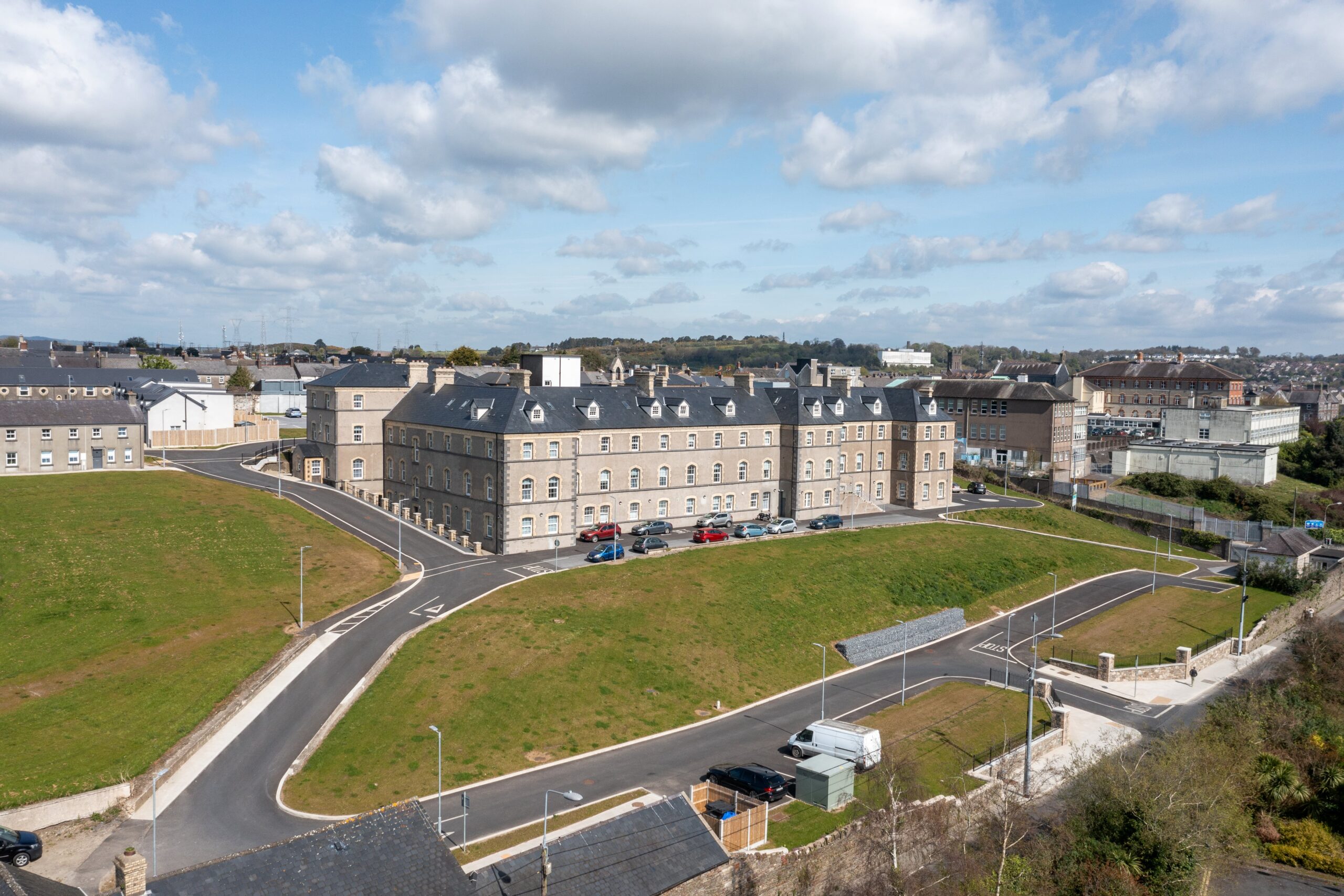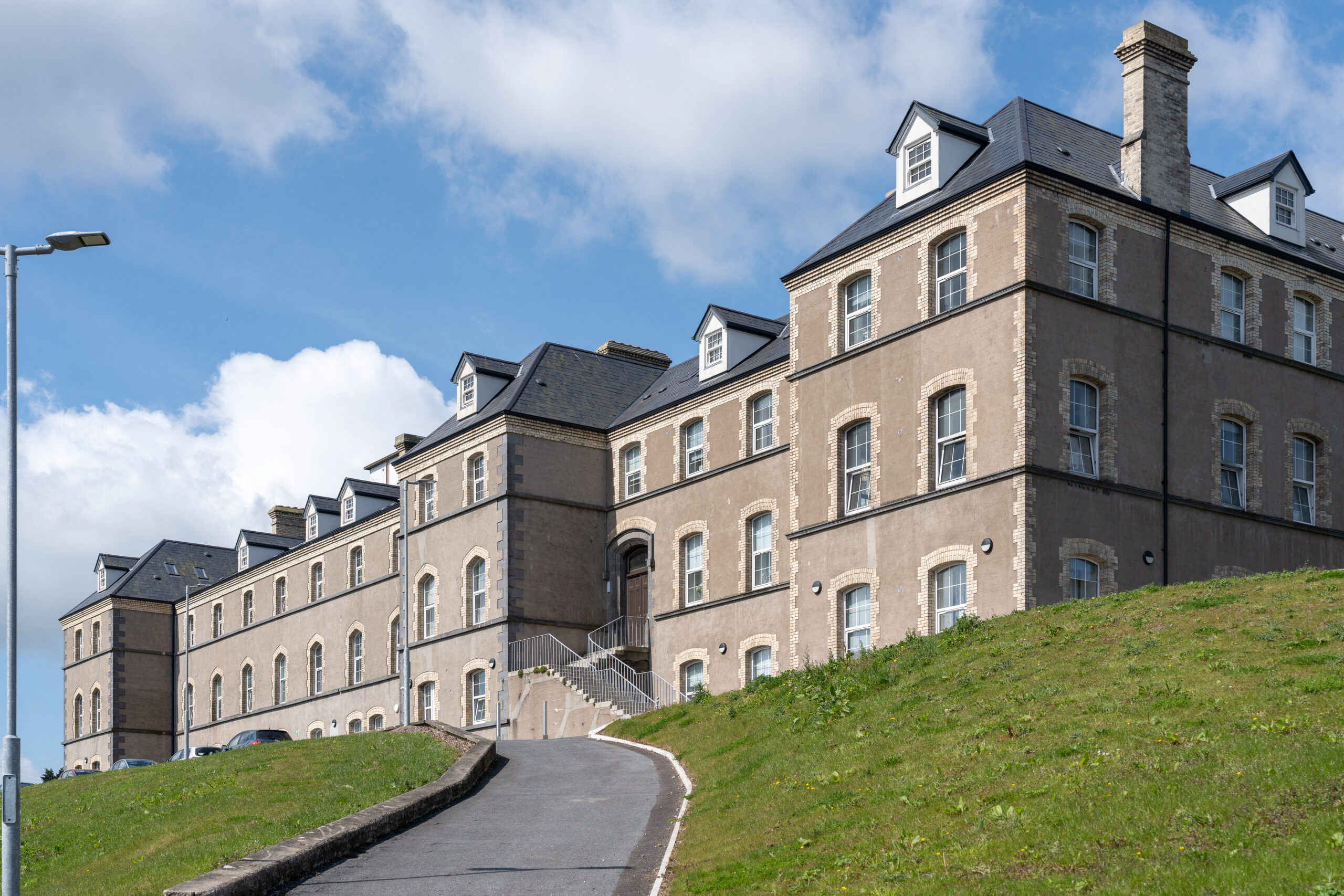
The property, which had remained unused for a number of years following the closure of the convent takes up almost an entire block of Waterford City sitting between the residential areas of Barrack Street, Carthage’s Avenue and Hennessy’s Road, the SETU College Street Campus to the south and the main city centre. Integral to the overall site strategy was to introduce multiple points of access for pedestrians that would both facilitate easy and practical access for the residents of the scheme and also allow residents in adjoining areas to utilise the new public footpaths and the landscaped grounds. Previously, the property allowed for no public access and was effectively walled off from the surrounding streets on all sides. A new main vehicular entrance to the development has concentrated the majority of traffic away from the pedestrian access points and has allowed for the front of the property to be opened up visually to the passing public, emphasis’s both the change of use from religious to residential and the sites change in engagement with the broader public. The former chapel has been repurposed into the main entrance of the building and also functions as a day room/multi-purposes space for the residents.
A project of this type brings a number of advantages including the adaptive re-use to residential of former religious buildings, the delivery of much need housing in an area of high demand, the outward visual benefit of the upgrade works in tandem with the wholesale change in the sites engagement with its own context and also, in this instance, has allowed Waterford City and County Council to engage in a ‘right sizing’ exercise within there own housing stock, freeing up larger family sized homes within the city centre.